
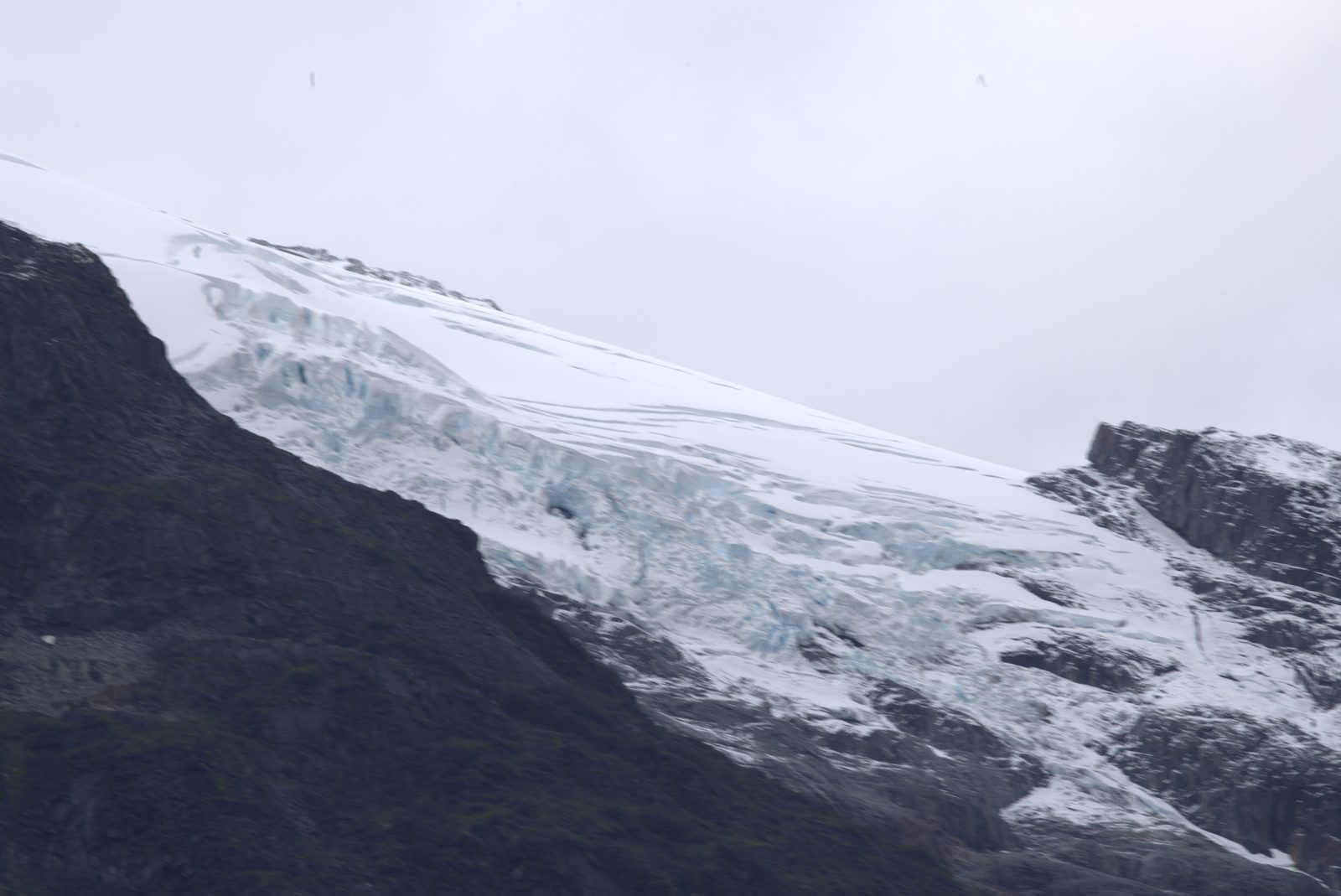
Most glaciers in Aysén ask for a boat, a plane or several days on foot. Ventisquero Colgante in Queulat National Park asks for a car park on the Carretera Austral and a few hours in the forest. That is why almost everyone driving north from Coyhaique sees it, and why it pays to know how to see it well.
This guide is written by AysenFjord, which runs private 12-day expeditions for 3 to 6 people in the Aysén region. The expedition visits Queulat when weather and time allow.
The short answer
The entrance to the Ventisquero sector is about 20 to 22 kilometres south of Puyuhuapi, right on the Carretera Austral. From the car park a forest trail climbs to a viewpoint below the glacier, roughly 5 to 6 kilometres return. Buy your ticket in advance on pasesparques.cl. Coyhaique is more than 200 kilometres away, so a day trip means leaving early and getting back late.
What a hanging glacier is
The ice never made it down to the valley floor. It stopped above a cliff, and waterfalls drop from its snout into Laguna Témpanos below. In mist you see only a white rim. On a clear day you also see the meltwater running down the bare rock.
Queulat National Park was created in 1983 and covers more than 154,000 hectares. The hanging glacier is its best-known corner. The rest is rainforest, lakes and mountains with only a handful of trails.
Three ways to see it
From the short trails by the car park. They lead to Laguna Témpanos and to a viewpoint where the glacier is visible from a distance. If you are short on time or knees, you still get to see it.
From the trail to the upper viewpoint. The main trail is now called La Morrena, formerly Ventisquero Colgante. It crosses a suspension footbridge over the Ventisquero river and then climbs through the forest. It is 5 to 6 kilometres return; with a stop at the top, allow three to three and a half hours. Not technical, but wet and uphill.
From the water. In season, boats run on Laguna Témpanos. It is the view from below, from the level where the waterfalls land.
Before you go
Ticket in advance. CONAF sells park entry through pasesparques.cl. Local operators recommend buying it no later than the day before your visit.
Opening hours. According to reports from the 2026 season, the park is closed on Mondays and you must start the main trail by 1:30 pm so that everyone is back before closing. Rules change, so check them when you buy your ticket.
Clothing. Queulat sits on the wet side of the Andes and has no dry season. A waterproof jacket and boots that can handle mud matter more here than a warm layer.
A day from Coyhaique, or a night in Puyuhuapi
The park is more than 200 kilometres from Coyhaique along the Carretera Austral. Organised trips from the city take around fifteen hours, roughly four of them driving each way. It works, but you spend most of the day in a car.
Staying in Puyuhuapi, twenty kilometres from the entrance, is better. You are at the park among the first in the morning, and the afternoon is free for the lagoon or the hot springs around the village. Puyuhuapi, incidentally, was founded by settlers from the Czech borderlands, but that is a story for another article.
Coming from the south, you cross the Portezuelo Queulat pass, where the road climbs through 33 bends. The short Bosque Encantado trail, the Enchanted Forest, starts in the Portezuelo sector.
What to take away
Queulat is the easiest glacier to reach in Aysén. That does not make it a lesser sight. It only means you can drive to it, so arrive in the morning, not on a Monday, with the ticket on your phone.
For a glacier no road leads to, read San Rafael Glacier. Where Queulat sits in northern Patagonia is covered in Patagonia Without the Crowds, and the region as a whole on the Patagonia and the Aysén region page.