
When people ask about cost, they mean the flight. But the flight is only the ticket in, and it is the part everyone can price themselves. I broke it down in the article on when to fly: Prague to Balmaceda, return, runs from roughly USD 1,400 to 1,750 depending on dates and how long you are willing to spend in transit.
This article is about what happens afterwards. It is about the money you spend on the ground, and about the line items nobody plans for until they are standing at a fuel pump in Puerto Río Tranquilo.
Short answer
Two weeks in the Aysén region, flights excluded:
- Spartan: long-distance buses, hostels, cooking for yourself: roughly USD 900 to 1,300.
- Middle: a car shared between two, guesthouses, restaurants some nights, two or three excursions: roughly USD 1,800 to 2,600.
- Comfortable: your own 4×4, lodges, guided trips: roughly USD 3,500 to 5,200.
The gap between the extremes is fourfold. Not because one is better, but because of how much logistics you are willing to carry yourself.
What things cost
The figures below are indicative ranges from August 2026, in US dollars. You pay in Chilean pesos and the rate moves, so treat them as orders of magnitude, not a price list. Aysén prices are also season-sensitive: January and February are Chilean summer holidays too.
| Item | Range | Note |
|---|---|---|
| Hostel bed | USD 15–25 | Coyhaique and larger towns |
| Double room, guesthouse | USD 45–80 | family hospedaje, breakfast usually included |
| Lodge / better hotel | USD 100–200 | higher again in remote places |
| Food, self-catering | USD 20–30 / day | supermarket in Coyhaique; dearer further out |
| Food, restaurants | USD 45–60 / day | lunch and dinner, no alcohol |
| Diesel | around USD 1.3 / litre | higher in remote villages, stations are sparse |
| 4×4 rental | USD 70–120 / day | book months ahead in season |
| National park entry | USD 5–15 | CONAF, often bought online in advance |
| Boat to the marble caves | USD 20–35 | kayak considerably more |
| Full-day boat to a glacier | USD 150–250 | the single largest line item |
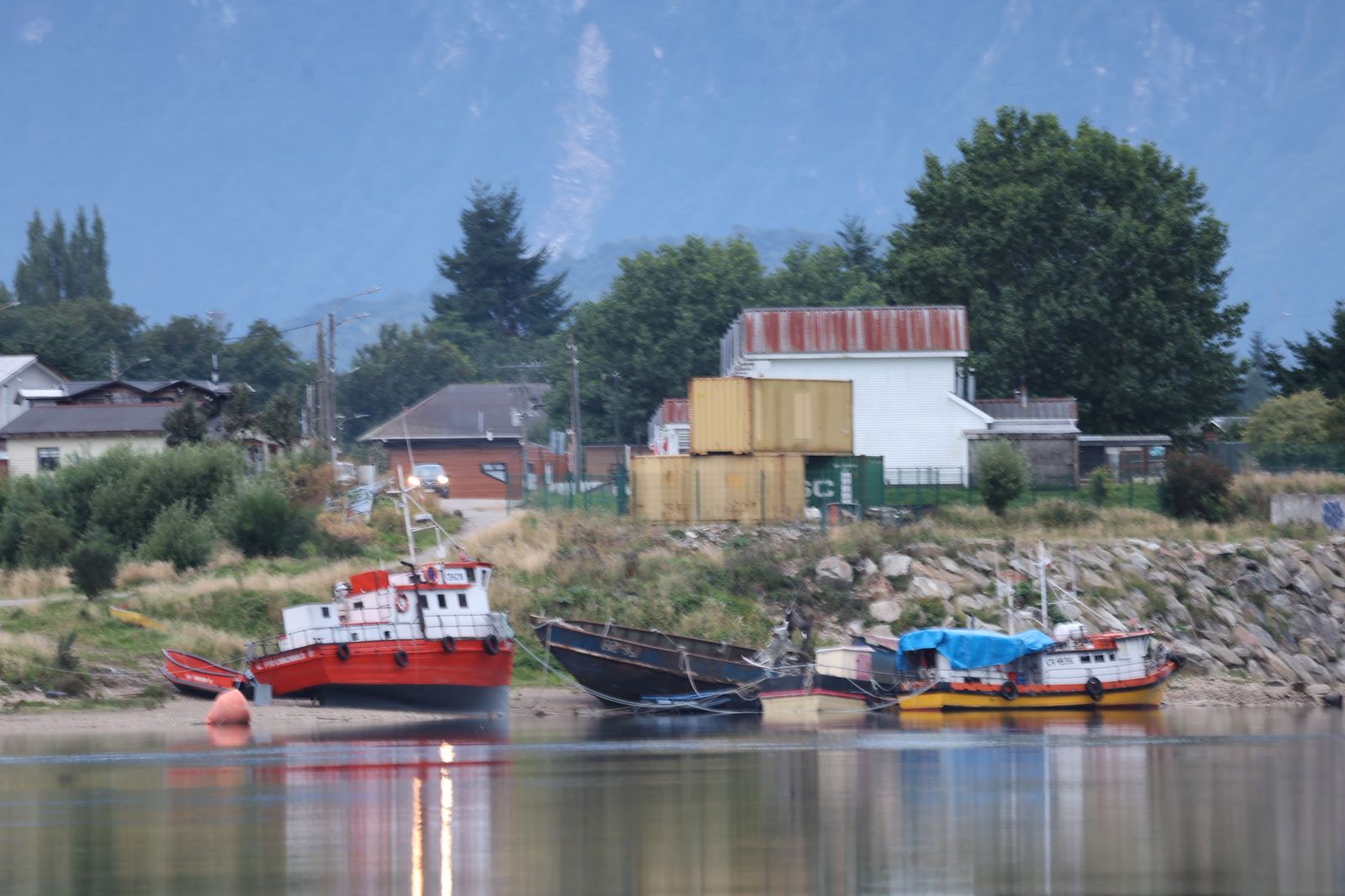
The most expensive thing in Aysén is not hotels but water. Everything done from a boat, meaning glaciers, fjords and channels, costs an order of magnitude more than anything on land, because both boat and fuel are expensive and the season lasts four months.
Three two-week budgets
| Item | Spartan | Middle | Comfortable |
|---|---|---|---|
| Accommodation | USD 250 | USD 700 | USD 1,800 |
| Food | USD 350 | USD 550 | USD 800 |
| Local transport | USD 200 | USD 700 | USD 1,400 |
| Excursions and entries | USD 150 | USD 400 | USD 800 |
| Contingency | USD 150 | USD 250 | USD 400 |
| Total, flights excluded | USD 1,100 | USD 2,600 | USD 5,200 |
"Local transport" in the middle column assumes a car shared between two people. Travelling alone doubles it, and in Aysén that is the fastest way to send a budget through the roof.
The costs people forget
- One-way rental. Picking a car up in Puerto Montt and dropping it in Coyhaique sounds sensible until you see the relocation fee. With some companies it is the most expensive line in the contract.
- Border permission. Taking a rental car into Argentina requires paperwork from the rental company. It is arranged in advance and it costs. Without it you do not cross.
- Ferries. On the northern stretch of the Carretera, a car on the deck is a cost of its own, and in season it is booked weeks ahead. Without a booking you wait, or you do not go.
- Cash. In larger towns cards work almost everywhere. In small villages, on boats and with fishermen they do not. An ATM in a remote village may be empty or out of service.
- Travel insurance. Remoteness here is real. Insurance that does not cover evacuation from the field does not mean much in Patagonia.
- An extra night in Santiago. A same-day connection looks fine on paper until something runs late.
Where you can save, and where you cannot
You can save on beds and on food. Family guesthouses are cheap, clean and you learn more over their breakfast table than in any hotel. The supermarket in Coyhaique has ordinary prices, and Chilean fish costs a fraction of what it does at home.
You cannot save on transport or on water. Distances in Aysén are long, buses are infrequent, and the thing you came for, meaning glaciers, fjords and channels, is by definition reachable only by boat. Save on that and you will travel to Patagonia to look at a road. Whether to organise it yourself or buy a finished programme is a separate question, covered in the article on tour operator versus small expedition.
And there is one economy that never pays: shortening the trip. The flights alone eat nearly two days each way. Ten days on the ground is the minimum below which the ratio between travel time and Patagonia time stops making sense.
Why Aysén costs more than the rest of Chile
The region covers 108,000 km², more than Iceland, and about a hundred thousand people live in it. Goods travel hundreds of kilometres along a single road or arrive by boat. The season lasts four months and has to fund the other eight. All of that is in the price.
It is the tax you pay for nobody being there. If you want Patagonia without the crowds, you also pay for it having no supermarket chains.
And if you would rather not count at all
The budgets above assume you arrange everything yourself: car, ferries, boats, beds, bookings, border paperwork. It is entirely doable and plenty of people travel that way.
The other option is to pay once and hand the logistics to someone who knows the people there. Our twelve-day expedition costs USD 4,800 in the founder edition and covers everything on the ground, including four days on a boat in a fjord you cannot reach any other way than with a local captain.
Neither route is better than the other, it just helps to know which one you are budgeting for.