
Torres del Paine is an excellent national park. It is also a park where January campsites are booked months ahead, where there is a queue at the viewpoint, and where you share the trailhead with a coach. The numbers side by side are in Aysén or Torres del Paine?
When somebody says "I want Patagonia, but not like that," they usually think they want a different season. Most of the time they want a different piece of Patagonia.
Why the south is full
Southern Patagonia has three things at once: world-famous names, finished infrastructure, and airports within half a day of both. Torres del Paine and Perito Moreno are on every "see it before you die" list and draw hundreds of thousands of people a year. Torres del Paine alone received around 380,000 visitors in the 2024/25 season. The whole Aysén region, nearly fifty times larger, welcomed about 230,000 in summer 2025/26. When to go.
That is not a criticism, those places have earned their reputation, you simply pay for it by never being there alone.
Where northern Patagonia actually starts
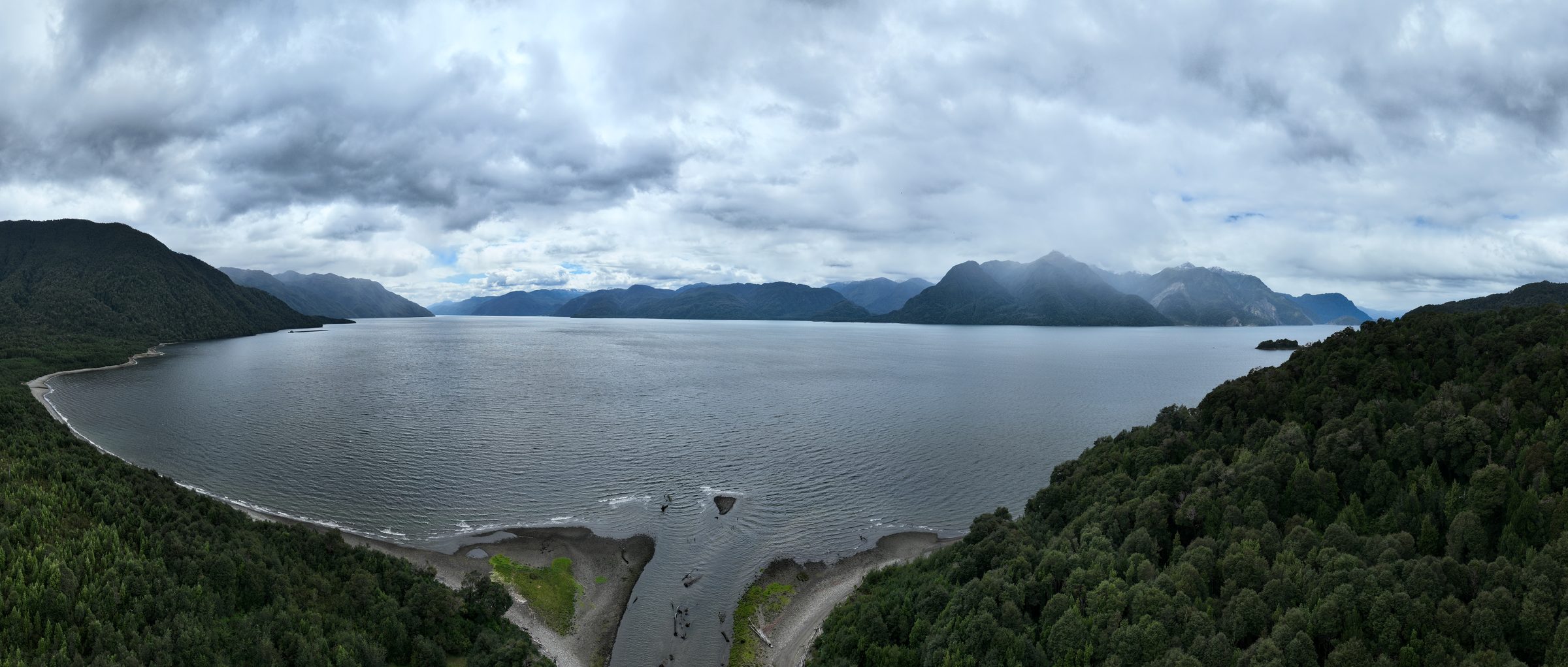
Roughly at Puerto Montt, and it ends somewhere around Lake General Carrera. Most of it is Chile's Aysén region: 108,000 km², about a hundred thousand inhabitants and a single through road, the Carretera Austral.
It has not one name everybody knows. It has exactly the landscape people fly south for, meaning glaciers, rock towers and lakes of an impossible colour, just without the label.
Five places with southern scenery and northern quiet
1. Cerro Castillo
A jagged basalt wall above the Carretera Austral, an hour south of Coyhaique. The four-day traverse beneath its face is increasingly described in English as the new W trek, with all the same qualities and one difference: there are no refuges, campsites are not booked half a year ahead, and you meet an order of magnitude fewer people. How to do it.
2. Queulat and the hanging glacier
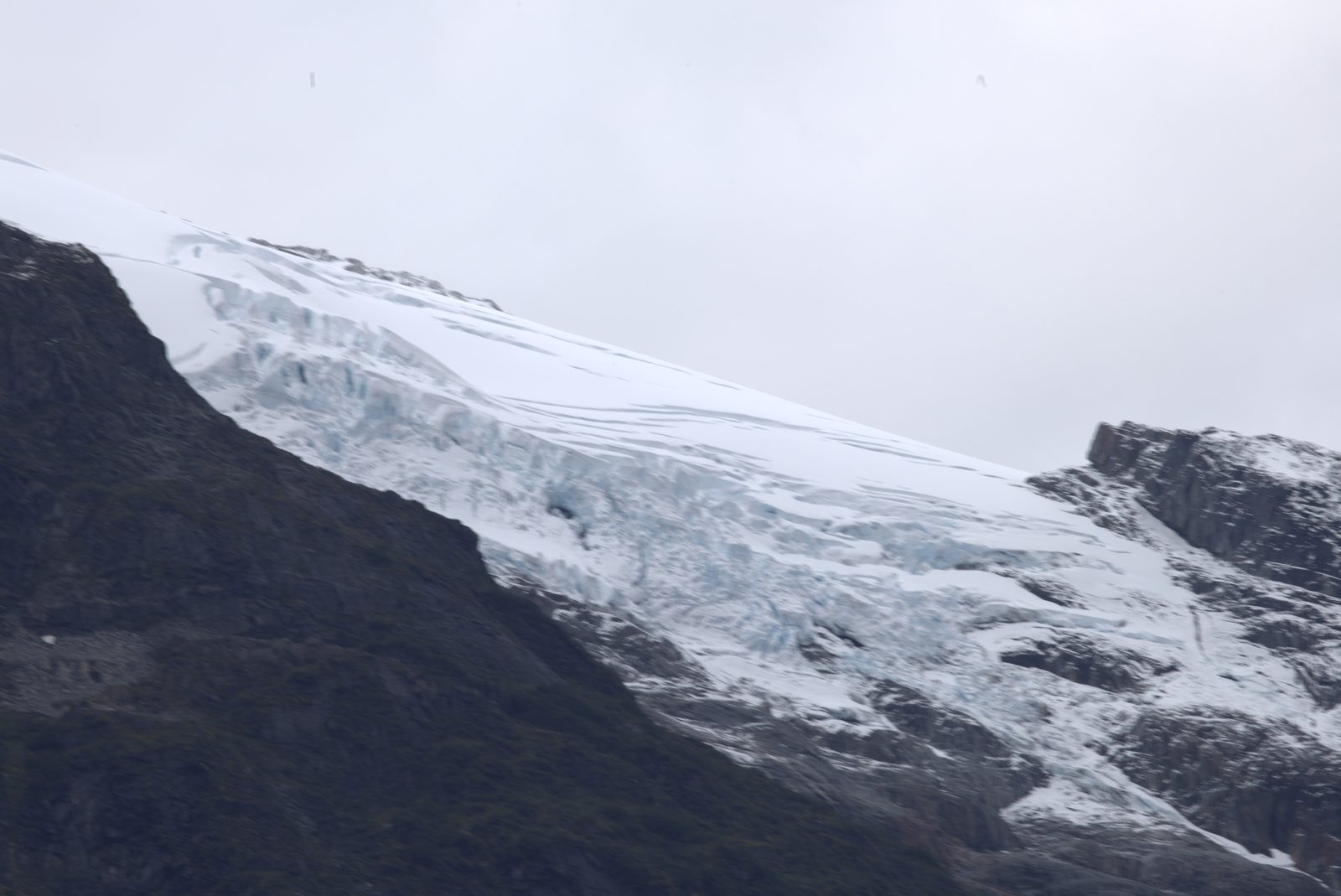
A glacier suspended between two rock walls, with a waterfall dropping straight out of the ice into the lake below. The viewpoint is about an hour's walk from the road. For that fairly modest effort you get one of the least plausible sights in all of Patagonia.
3. Laguna San Rafael
A glacier that ends directly in a lagoon and calves house-sized blocks into it. No road reaches it, so you get there by boat or by plane, and that inaccessibility is exactly why there are no crowds. What it is like.
4. The marble caves
Marble columns and vaults worn out of the shore of Lake General Carrera, entered by small boat or by kayak. It is the most photographed thing in Aysén, and even so it draws a fraction of the visitor numbers of the southern parks. When and how.
5. The inner fjords
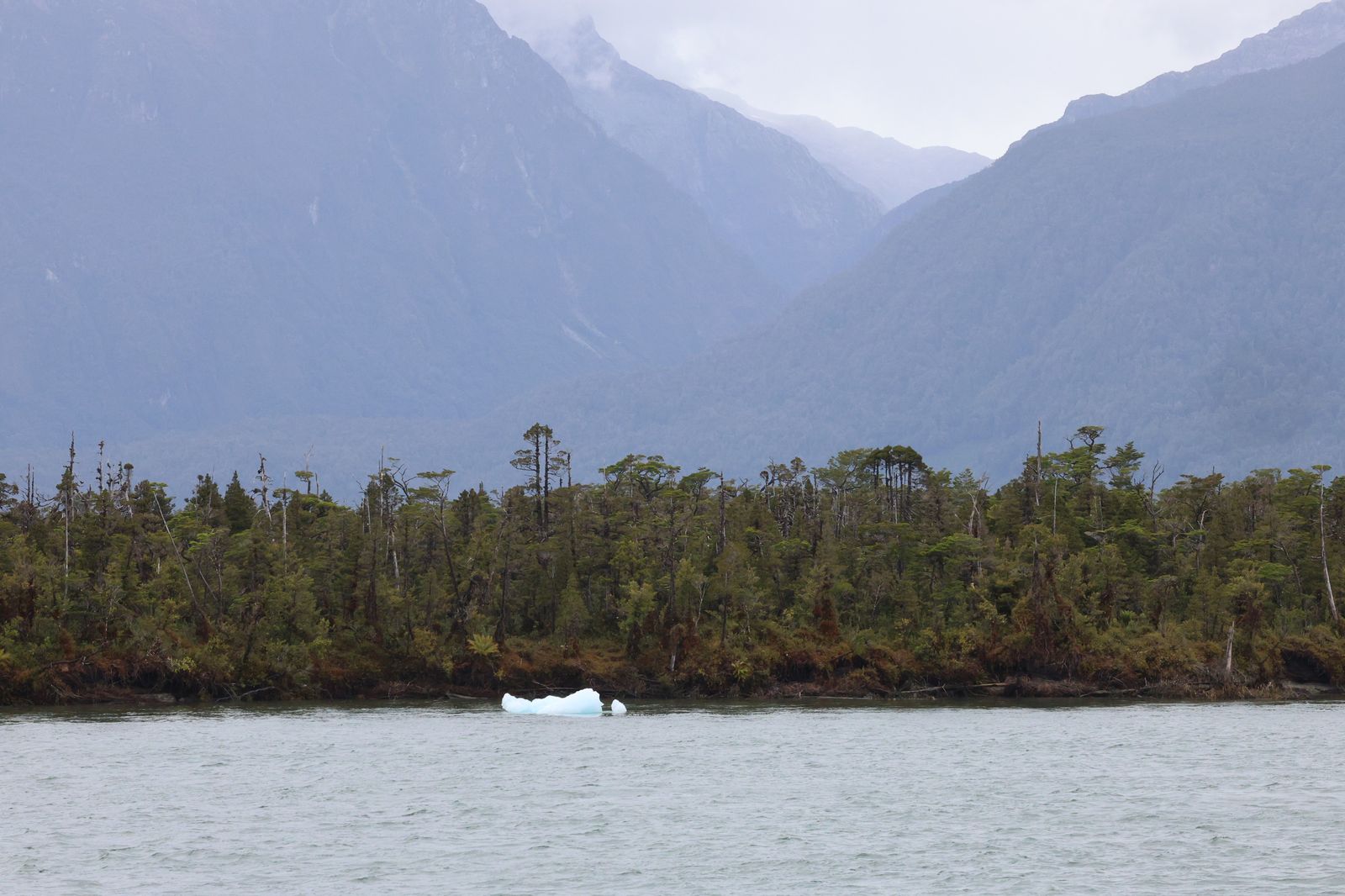
This is the part you will not find even in guidebooks to Aysén. Side fjords and channels west of Puerto Aysén, with no road to them and nothing but fishing boats going in. No infrastructure, no railed viewpoints, no signal.
What it costs you
Emptiness is not free, though, and there are four things to plan around:
- Weather. The north is significantly wetter than the south. Four seasons in a day is not a phrase here, it is a plan.
- Logistics. Fewer services, fewer rental desks, fewer people who speak English. Without a car or a local contact your range is limited.
- Time. Distances are long and gravel means fifty kilometres an hour. Ten days is the minimum here, not the comfortable option.
- Support. If something breaks, the nearest help can be a hundred kilometres away. That applies to the car and to you.
If you read that as a list of drawbacks, you are right. It is precisely the list that keeps visitor numbers low.
When to go so you are not entirely alone
January and February are the southern summer and the best window in Aysén too, with the longest days, the warmest weather and the least rain. The difference from the south is that high season here does not mean queues, only that the boats are running and the guesthouses are open. In detail in the article on months and flights.
How to get here
The gateway is Balmaceda airport, two and a half hours' flight from Santiago. From there it is an hour by road to Coyhaique and another hour to Puerto Aysén. All five places above are reachable from that axis, three by car (the caves then a short boat ride) and two only by water or air.
The alternative is to arrive along the Carretera Austral from the north, which is a multi-day journey in itself. What that involves.
Who this is not for
Anyone who wants certainty about the weather. Anyone with ten days who wants to see Torres del Paine, Fitz Roy and the fjords in them. And anyone who needs to be reachable, because in the fjord there is no signal.
For everybody else the point is simple: in northern Patagonia you get the same landscape as in the south, you just will not be sharing it. The price is not paid in money but in comfort.