
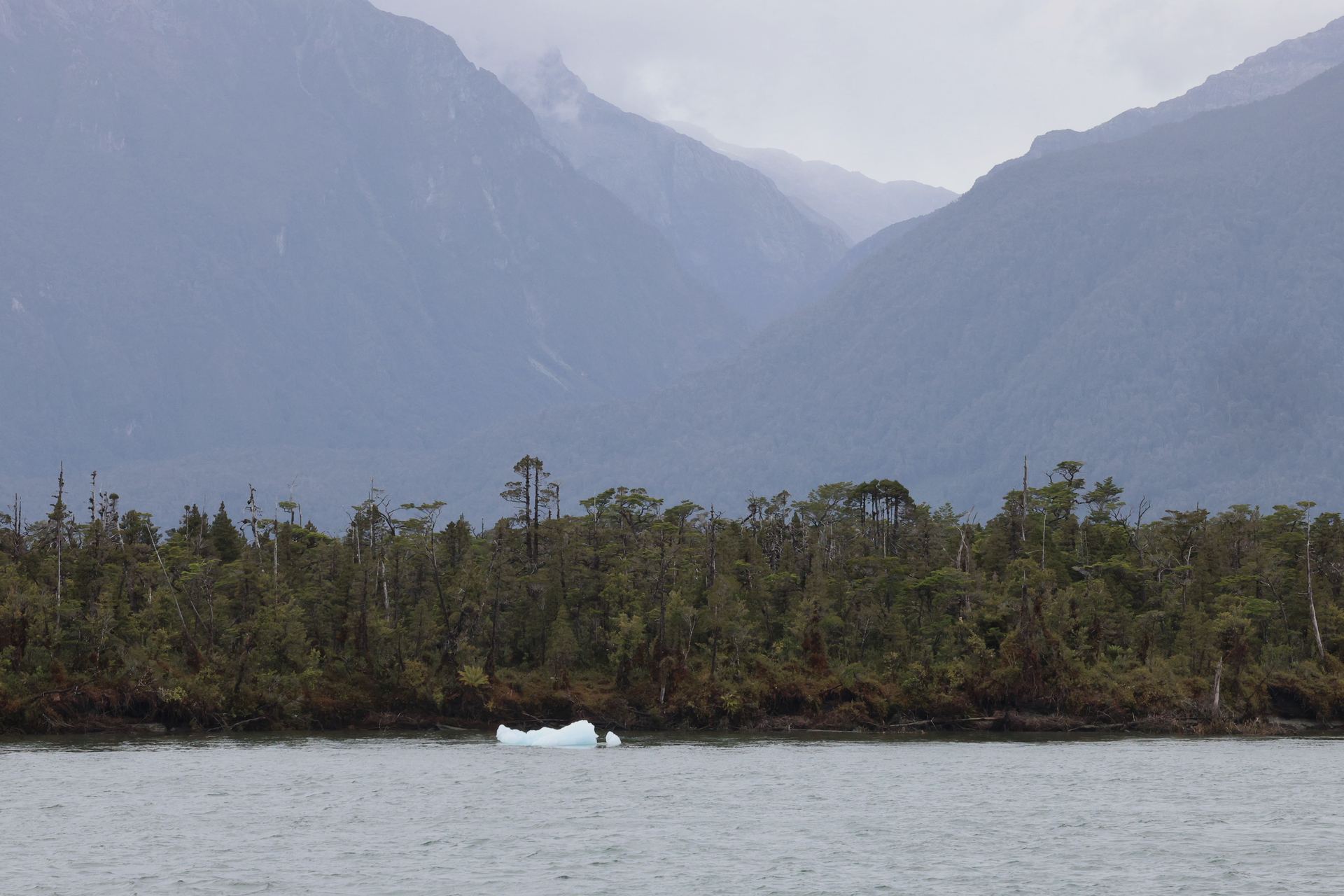
Patagonia is one landscape divided between two states, and that border is not merely a political detail. The Andes act as a wall against moist Pacific air. On the Chilean side, several metres of rain fall a year. On the Argentine side, a hundred kilometres away, steppe grows.
So "Chile or Argentina" is not a question about which country is prettier. It is a question about which landscape you want to see.
Short answer
- Chile if you want fjords, glaciers calving into the sea, rainforest and water. Harder to travel, and it costs more.
- Argentina if you want steppe, sharp granite towers, long distances and simpler logistics. Usually cheaper.
- Both if you have three weeks and do not mind spending a third of them in transit.
One mountain range, two entirely different countries
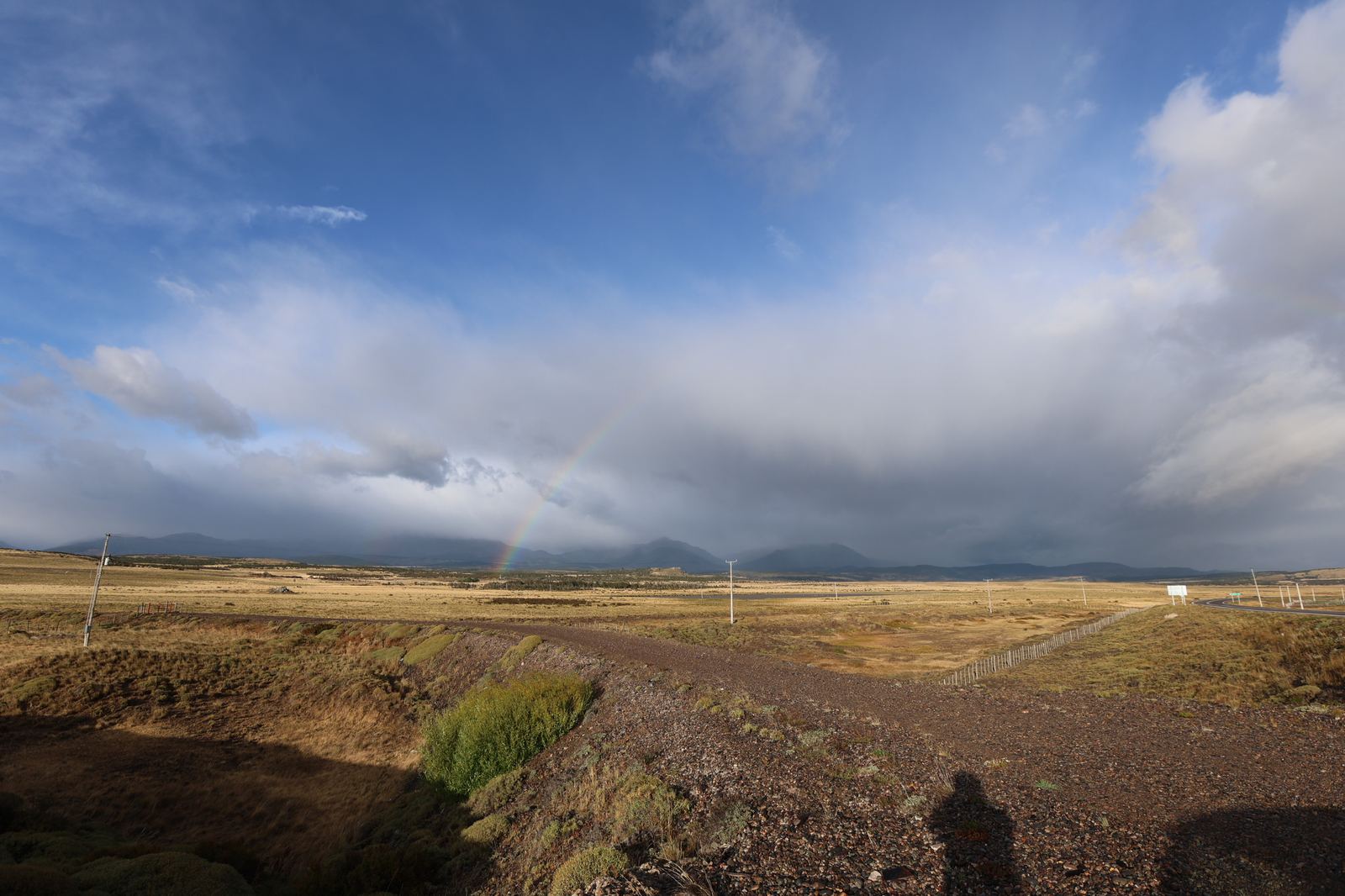
Westerly winds carry moisture off the Pacific, hit the Andes, drop it and cross the ridge dry. That is why Chilean Patagonia is green, cut apart by fjords and nearly impassable, while Argentine Patagonia is open, yellow, and lets you see tens of kilometres.
What that means in practice: in Chile you travel by water and around obstacles. In Argentina you travel on tarmac and across emptiness. In Chile the weather is a matter of the hour; in Argentina, of the day. In Chile a fjord stops you; in Argentina, distance does.
What is where
| Place | Side | What people go for |
|---|---|---|
| Torres del Paine | Chile (south) | three granite towers, the W trek |
| Perito Moreno | Argentina | a glacier reached on walkways |
| Fitz Roy, El Chaltén | Argentina | the most photographed peak in Patagonia |
| Ushuaia | Argentina | often called the southernmost city, gateway to Antarctica |
| Carretera Austral, Aysén | Chile (northern Patagonia) | fjords, glaciers, rainforest, emptiness |
| Laguna San Rafael | Chile | a glacier with no road to it (by boat or small plane) |
| Marble caves | Chile | marble columns carved out by a lake |
| Península Valdés | Argentina | whales and marine mammals on the Atlantic coast |
Notice the famous names split fairly evenly. The difference is density: in Argentina they sit far apart with steppe in between. In Chile they sit closer together, with water in between.
Logistics: which side is easier to travel
Argentina
Long-distance buses are the backbone of the country, they run reliably and can be booked online. Roads are long, straight and paved. The distances are vast, so a night on a bus is a normal part of the trip. If you would rather not drive, Argentina is the easier side.
Chile
The bus network in Patagonia is sparse and some stretches are served only by ferry. Without a car you depend on infrequent services and on hitching. On the other hand distances are shorter and things sit closer together. With a car, Chile gives you more freedom; without one, considerably fewer options.
I went through this in detail in the Carretera Austral article, including the ferries you cannot avoid.
Money
Chile is more expensive and more stable. Prices are predictable, cards work almost everywhere in towns, and the exchange rate does not swing dramatically.
Argentina tends to be cheaper, but its economy has been volatile for a long time. Recalculate prices just before you travel rather than from an article six months old, and check the current situation on cash and exchange rates in advance. What held last year may not hold this year.
Combine them, or not
Combining makes sense from three weeks upwards. Under two weeks it is self-harm, because borders, transfers and paperwork eat the time you wanted to spend outdoors.
What to know in advance:
- A rental car crossing the border needs special permission from the rental company, arranged in advance and charged for.
- Patagonian border crossings are far apart and some have limited opening hours. One closed crossing means hundreds of kilometres of detour.
- Food into Chile: fresh fruit, vegetables, meat and dairy must be declared on entry and are usually confiscated. Checks are thorough and undeclared food can bring real fines.
- Cross-border one-way rentals are not offered by most companies at all. The car normally has to be returned in the country you collected it in.
How to choose by what you want
- You want to trek among mountains and do not mind meeting people → Torres del Paine in Chile or El Chaltén in Argentina. Both are superb and both are busy.
- You want one iconic photograph for the least effort → Perito Moreno in Argentina. Walkways take you to the glacier without breaking a sweat.
- You want southern-scale landscapes without queues or booking months ahead → the north of Chilean Patagonia, the Aysén region. Fjords, rainforest, glaciers and a hundred thousand people spread over 108,000 square kilometres. The numbers: Aysén or Torres del Paine?
Which side we chose
The Chilean one, and not for the famous names. Aysén has neither Torres del Paine nor Fitz Roy. Nor does it have their queues. What it has are inner fjords with no road to them, which can only be visited with someone who lives there.
That is a layer of Patagonia you will not get even in Chile if you stay on the road. It is also why the expedition goes where the tour operators turn around.