
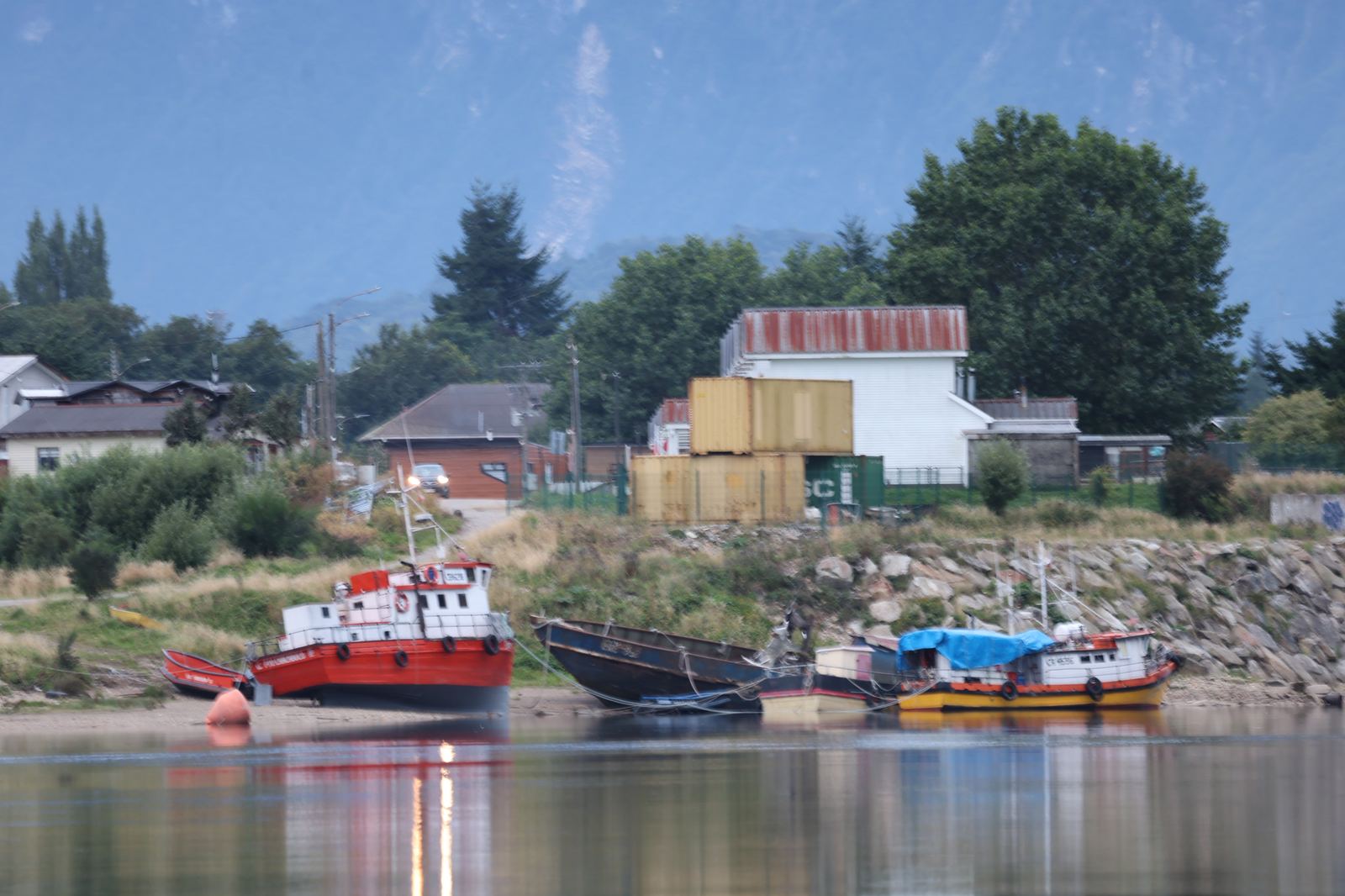
There are two towns on the map of Aysén that almost everyone passes through. Coyhaique, where you shop, refuel and sleep after landing. And Puerto Aysén, an hour further on, which most people never reach because the road ends there at the water.
The two are close, but each shows a different face of the region. Coyhaique is where you set out into Aysén. Puerto Aysén is where Aysén began.
The short answer
Coyhaique is the regional capital and its supply base. Banks, supermarkets, car rentals, a hospital. One night after you land and one before you fly out.
Puerto Aysén is the port town at the river mouth from which the region was settled. Fishermen, a bridge over the river and a fjord on the doorstep. A place worth staying longer.
Puerto Aysén: a town built by a port
At the start of the last century there was nothing here. The ranching company Sociedad Industrial de Aysén needed to get wool and livestock to the sea, so from 1903 it built a port at the river mouth. A settlement grew around it, then a town. Puerto Aysén was officially founded on 28 January 1928.
For decades it was the gateway to the whole region. Then the river that gave it life began to silt up the port. In the 1960s the port moved fifteen kilometres to Chacabuco Bay, and the regional administration gradually moved to Coyhaique.
Today the municipality of Aysén has around 23,000 people. They live from fishing, salmon farming, cattle and, increasingly, tourism. In January 2028 the town turns one hundred.
A bridge where history was made
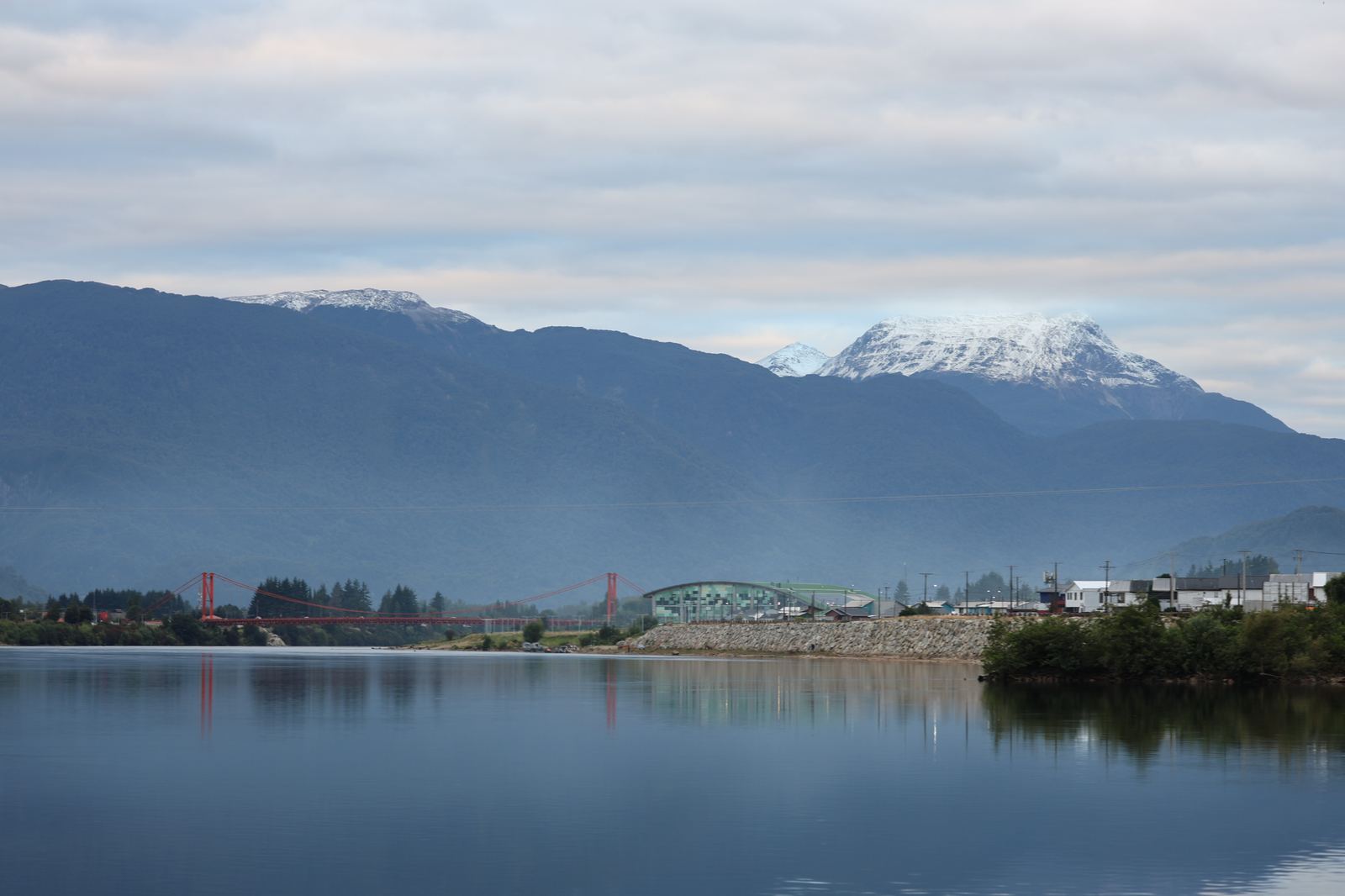
The river is crossed by the Puente Presidente Ibáñez, a 210-metre suspension bridge hung from two metal arches. Construction began in 1961 and it opened in 1966. It has been a national monument since 2002, and Chile's monuments council lists it as the country's longest suspension bridge.
In February 2012 it became a symbol. The region rose up under the slogan Aysén, tu problema es mi problema, "Aysén, your problem is my problem". For about forty days people protested for cheaper fuel, better healthcare, a university of their own and fishermen's rights. The bridge was at the centre of it.
Walking across it today, you walk over the place where the region fought for what the rest of Chile took for granted.
Coyhaique: a capital with a pentagon
Coyhaique is younger. It was founded on 12 October 1929 as Baquedano and renamed five years later. Its main square has an unusual pentagonal shape, with ten streets radiating from it.
The municipality has around 58,000 people, more than half the region. It has everything you need in a remote area: banks, supermarkets, car rentals, fuel stations and the regional hospital. Cerro Mackay with its rock columns rises above the town, and Coyhaique National Reserve, with lagoons and forest, begins five kilometres from the centre.
Balmaceda airport is about 55 kilometres from Coyhaique, a little under an hour by car.
In between: the Simpson valley
The road from Coyhaique to Puerto Aysén is about 65 kilometres long and follows the Simpson River valley. At kilometre 37 lies Río Simpson National Reserve, with a visitor centre and waterfalls. A little further down, the Simpson joins the Mañihuales to form the Aysén River, which flows on to the town.
It is an hour's drive that can be done quickly or turned into a whole day.
Puerto Chacabuco: where the boats leave
Fifteen kilometres beyond Puerto Aysén is the port of Chacabuco. Boats to the San Rafael Glacier depart from here, and ferries from Chiloé and the channel ports call here. If you want to get on the water, this is where it starts. San Rafael Glacier.
Why stay in Puerto Aysén rather than drive past
Most itineraries run Coyhaique → Carretera Austral → south. Puerto Aysén is missing from them because it lies off the route and "there's nothing there". That is exactly the reason to go.
It is a town, not a backdrop. People live here all year and visitors are guests, not a livelihood. Every morning I went for coffee at a café on the square.
The fjord starts behind the town. Beyond Puerto Aysén the water leads into fjords no road reaches. You cannot get to them from Coyhaique.
The local economy needs guests who stay. The café on the square I used to go to closed this year. Day-trip tourism just drives through. Whoever sleeps here, eats here and sails with locals leaves more in the region than a photo.
What to take away
Coyhaique is where you prepare for Aysén. Puerto Aysén is where you first see it from the inside. Drive through only the first, and you know Aysén from a car window.
How it compares with the better-known south is in Aysén or Torres del Paine?