
Memorias de un Refugiado · Chapter 5 ·
Chapter 5:
My Father and the War
Václav Nový · translated from the Spanish original by Jaroslav Sokol · 9 min read
Last time I wrote that this was the last chapter in which Václav saw his father. It was the last time in his life that he saw him. Neither of them knew it then.
Chapter 4 was the brightest place in the whole book. This one is its counterweight. I won't dress it up and I won't turn it into drama. The war did that by itself.
What follows is an excerpt from Memorias de un Refugiado, which I am translating from the Spanish original. This is not fiction, it is an autobiography, the true story of Václav Nový. The full chapter appears in the book.
My Life in Europe, Chapter 5: My Father and the War
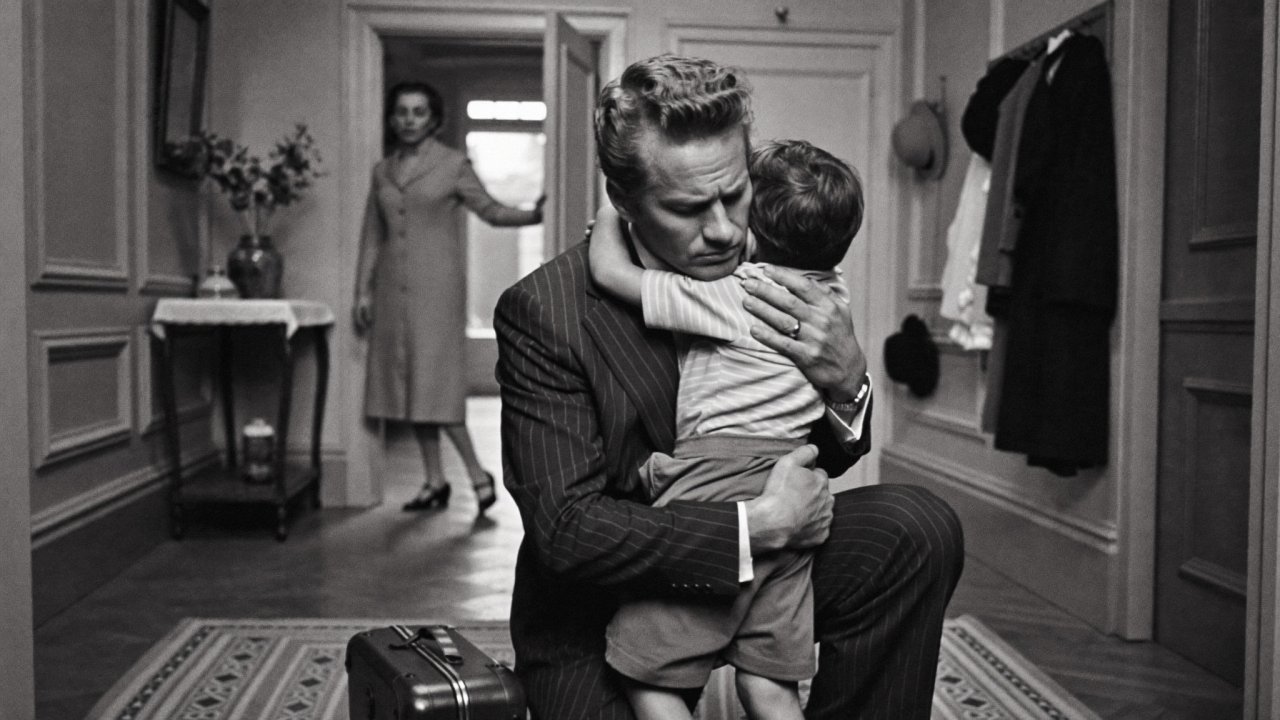
The event that changed my life from the ground up: one day the Nazis came and told my father he had to choose, either he joined the army or he went to a concentration camp. My mother, my sister and I wanted to resist, but my father explained to us that no real choice existed. They took him away. And that was the last time we saw him. My father was an engineer, so they appointed him a captain in the German air force, specialising in photography.
Now and then a letter came from him, but there were fewer and fewer. He flew in continuous operations and air battles, until one day a card arrived from the war ministry announcing that he had fallen.
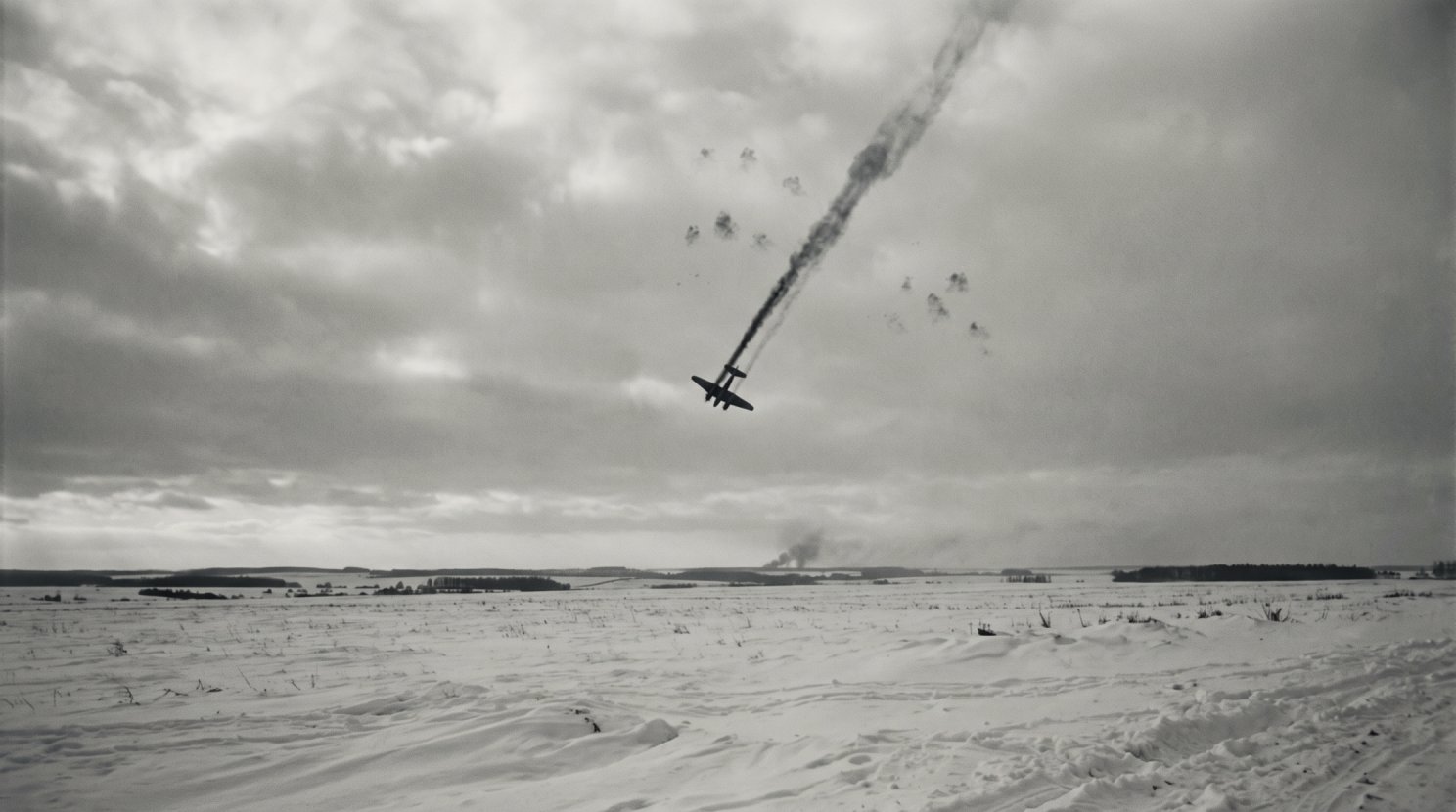
The tragedy struck my mother deeply. Above all because we could not bury him. A painful thing that stayed with me all my life.
Beside the great war, the small one
On the surface, life looked calm. In reality the war went on and fell on everyone. Food was rationed, on coupons issued once a month, though that applied in the towns; in the countryside they had plenty of everything. At home we lacked eggs, butter and poultry. German patrols watched the roads and it was forbidden to bring anything in from the country. The black market flourished, but at prices a person living by his work could hardly reach.
Several times my sister and I tried to get out to the countryside and bring something back, but the Germans were always patrolling the roads. Once we managed to outwit their vigilance. We carried batteries for torches, which were in very short supply in the country, and traded them for a goose. Luckily we didn't meet a single German and came home happy.
My mother settled the goose into a crate with a lid and fed it day after day to fatten it.
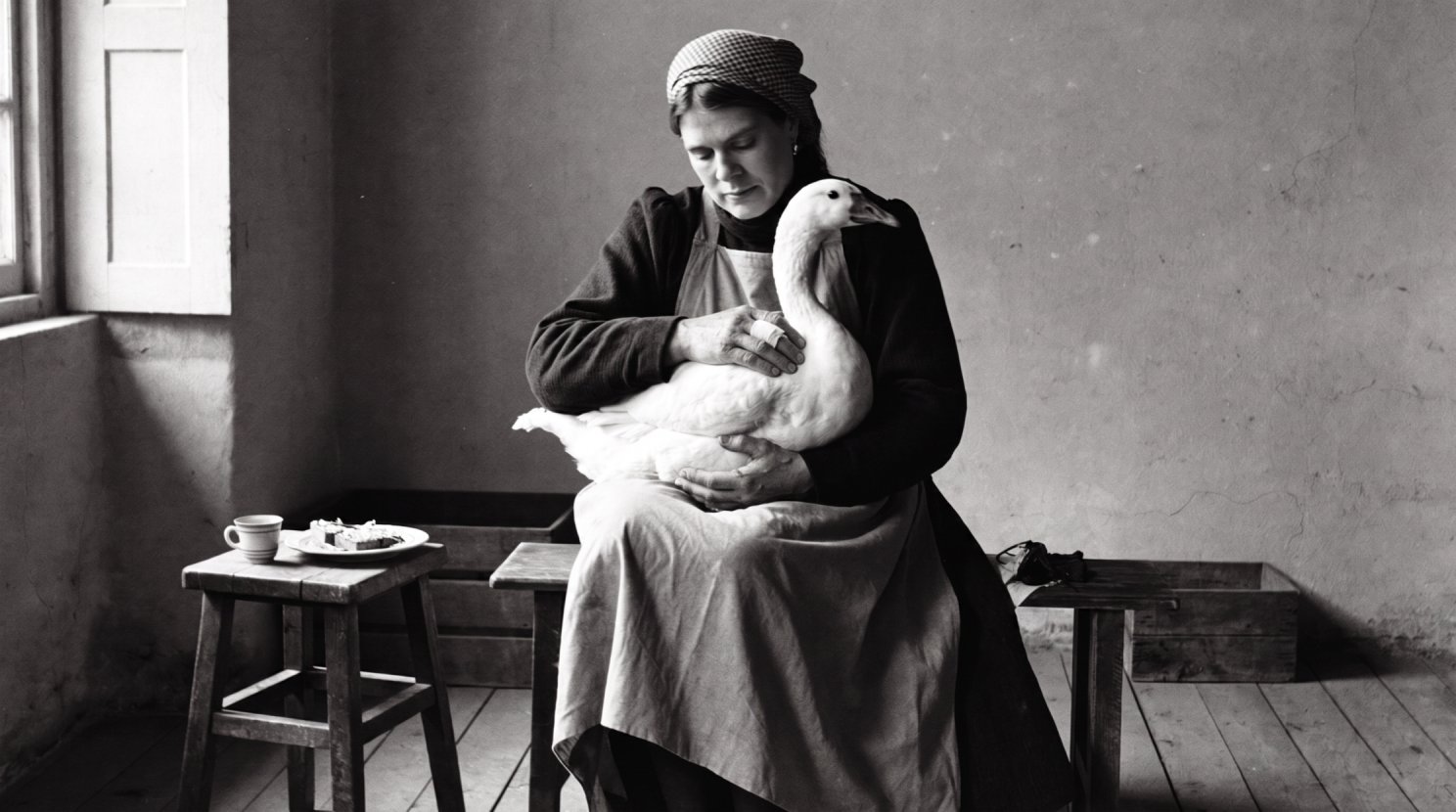
From bran and ground bread she made a dough, shaped it into pellets the goose could swallow, and baked them hard. Then she pushed them down the goose's throat with her finger until it was full, washing them down with sips of water. In time the goose was so fat it couldn't stand on its legs. Meanwhile my mother's finger was one open wound from the goose biting her. It was a great sacrifice for her, but the result was worth it.
Before long they killed the goose and for us it was a feast, goose fat is the most delicious thing there is, and the roast too. The feathers were carefully saved: they made eiderdowns from them, the quilts of those days, far warmer and softer than today's.
Hobnailed boots in the streets
In the end we even got used to their endless marching through the streets, day and night, to the patrols that never lost step. The sound of the hobnailed boots was loud, and at first you couldn't sleep through it when it came close. Because they might be going to one of the neighbours, to take him away. We lived in a house inside a courtyard, so we were a little further from that dreadful sound of German boots. But the war and the persecution went on. Arrests were known of every day, often of people we knew. They were taken away to the concentration camps.
All Jews without exception wore a yellow star sewn onto their clothes. And you could see there were fewer of them. Fewer and fewer.
Why the Nazis came for his father in particular, what the Protectorate school with its cane was like, the school thanks to which Václav could do arithmetic for the rest of his life, and how the BBC from London was listened to under a blanket: all of that is in the book.
My take
All my life I've heard that a person always has a choice. This chapter reminded me that it only holds in good times.
Václav's father was given a choice between a foreign uniform and a camp. On paper it was a choice; in reality it was two defeats. He picked the one from which he might at least theoretically come back to his family. It didn't work out.
It is easy to judge today, from a desk, knowing how the war ended. I'll go so far as to write that I don't know what I would have done. And I don't believe anyone who claims they do.
Because he was an engineer they made him a captain and put a camera in his hands. A man who did not choose that war was given the job of photographing it. Somewhere in the archives his pictures may still be lying. What came home instead of him was a card from the ministry. Václav had no grave to visit. He had a few years, a few letters, and whatever he had managed to pick up from his father.
And then there is the second war in that chapter, the small one. A mother who trades batteries for a goose and fattens it with a finger raw from its biting, so the children have something to eat. Say the word war and everyone pictures fronts and battles. Václav remembered a goose. In families, history isn't measured in battles but in what there was for dinner. My grandmother told me the same thing and carried it all her life, because she lived through that war too. She always said the most important thing is to have bread in the house, that it can save a life.
And this is where the chapter stops being only sad. The boy they took a house from, and then a father, grew into a man who survived everything the century still had in store for him, escaped across the border and built a whole new life at the end of the world. His father was a captain appointed by the Nazis. Václav became a captain himself, of his own boat, in the fjords of Patagonia. His father managed to hand him terribly little, and it turned out to be enough. Perhaps what gets handed on isn't quantity, but direction.
In the evening, while I translate this, my son sleeps next to me. One day he will surely ask me what our family was and what that war was. I'll tell him, perhaps on the deck at Jesenice, or on the way to Patagonia.
A request
Together with Václav's Chilean family we are looking for his relatives in the Czech Republic. The trail runs through Mariánské Lázně and Písek; the surnames are Nový and Martínek. If this chapter reminded you of something a name, a house, a workshop behind wide gates, a photograph in a family album, write to me. You may have the piece we are missing.
About the book
Memorias de un Refugiado is being published in Czech for the first time by Aysén Fjord Editions. Chapters appear gradually, first in the Sokol v Patagonii newsletter on LinkedIn, then here. All proceeds go to the author's family in Chile.
Next: Chapter 6: The End of the War. Chocolate for weapons, a Panzerfaust on a boy's shoulder, and May 1945, when two completely different worlds rolled into town one after the other.
The next chapter by email
Have the next part sent to you
Chapters of Memorias de un Refugiado come out every two weeks. I'll write when the next one is up, and now and then add something from Aysén, where the book was written. Nothing else.
Two emails a month at most. One-click unsubscribe. Your address is never shared, privacy policy.