
Memorias de un Refugiado · Chapter 3 ·
Chapter 3:
Písek
Václav Nový · translated from the Spanish original by Jaroslav Sokol · 6 min read
There is a longer gap between the last instalment and this one than I promised. There are two reasons and both are good ones.
The first is the book. Translation, digging through parish registers, preparing the Czech edition. The newsletter fell behind; the book moved forward.
The second matters more. My son is seven, and childhood can't be postponed or made up for later, so when I have to choose between LinkedIn and a day with him, I choose him. This project isn't only about him in the end. It's about the future of our children, about what we hand on to them and what world we show them.
And now back to 1938.
What follows is an excerpt from Memorias de un Refugiado, which I am translating from the Spanish original. This is not fiction, it is an autobiography, the true story of Václav Nový. The full chapter appears in the book.
My Life in Europe, Chapter 3: Písek
The Germans gave the Czech inhabitants twenty-four hours to leave the territory, and allotted each family half a truck. That was all a person could take away; the house, the furniture and other bulky things that would not fit into the allotted space had to stay. You could take a few suitcases and some clothes. We lost the house that had cost so much effort to acquire, and with it all the furniture and a great many things I no longer remember.
There was nothing for it but to move close to where my grandparents lived, to a town called Písek.
Ice for the breweries
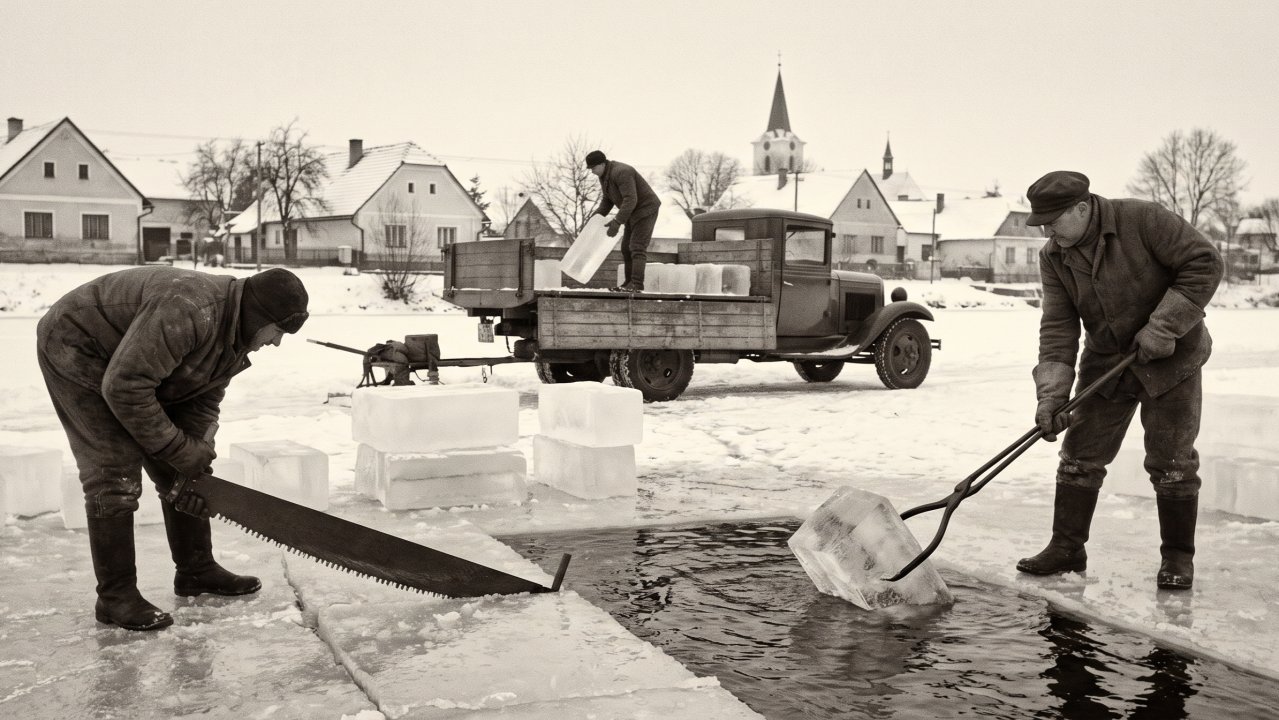
The town was threaded through by a river, beautiful in summer, but in the winter months it froze over, sometimes with ice two metres thick. Because in those years there were no refrigerators, and because Czechs are fanatical about beer, but cold beer, with a head, the ice had to be stored for the hot season. To that end, once the river had frozen over, they waited until the middle of December. By then the ice was about two metres thick. They cut it into great blocks and then the lorries drove straight out onto the ice to load them. Once loaded, they carried the blocks off to the breweries to keep the beer cold all year round.
We rented a house that stood inside the back courtyard of a large building. Opposite there was another house, just like ours. A family lived there with two daughters, the same age as us, and we soon became friends, our parents and we ourselves.
At the back there was a garden, but we were not allowed to go there.
What I planted in that scrap of ground by the gate, where I secretly fished and why I never told my mother, and the day they came for my father, all of that is in the book.
My take
Half a truck per family. One day to decide.
I tried to imagine it in our own house. What would I take if the rule were that whatever doesn't fit stays behind. Not furniture, not books. I'd end up with documents, photographs and tools.
Václav's mother bought that house in Mariánské Lázně herself and named it herself. In a single day it came down to a few suitcases.
When I flew to Aysén, I was also choosing what would fit. The only difference: nobody ordered me to, and I could come back whenever I liked. That isn't merit. That's the luck of being born into a good time.
And one more thing from this chapter stayed with me. They cut ice in December so they'd have something to cool with in August. Nobody called it planning then; it was ordinary work. In Patagonia it still holds: what you don't do in summer, you don't have in winter.
Václav lost his house at six. What he could see, nobody took from him, which is why this text exists at all, seventy years later.
About the book
Memorias de un Refugiado is being published in Czech for the first time by Aysén Fjord Editions. Chapters appear gradually, first in the Sokol v Patagonii newsletter on LinkedIn, then here. All proceeds go to the author's family in Chile.
Next: Chapter 4: Grandfather. A train of two carriages, a farmstead behind wide gates, and a bread oven you could sleep on.
The next chapter by email
Have the next part sent to you
Chapters of Memorias de un Refugiado come out every two weeks. I'll write when the next one is up, and now and then add something from Aysén, where the book was written. Nothing else.
Two emails a month at most. One-click unsubscribe. Your address is never shared, privacy policy.